6 Day Pacaya Samiria & Allpahuayo-mishana Birding Expedition
Expert Amazon Birdwatching in Flooded Forests, River Habitats & White-Sand Forests of Iquitos
For serious birdwatchers, the Peruvian Amazon is not one single habitat. Rivers, flooded forests, oxbow lakes, terra firme and rare white-sand forests support remarkably different bird communities. Our 6 Day Pacaya Samiria & Allpahuayo-Mishana Birding Expedition has been designed around that diversity, combining two outstanding birding environments in the Loreto region of Peru into one specialized journey from Iquitos.
Beginning with river and canopy birding before entering the Pacaya Samiria National Reserve region through the Yanayacu basin, we dedicate several days to searching for kingfishers, tanagers, cotingas, jacamars, toucans, aracaris, woodpeckers, parrots, macaws, raptors and wetland birds. We then completely change ecosystems and continue to Allpahuayo-Mishana National Reserve, famous among birders for its distinctive white-sand forest communities and highly localized species. Designed for experienced birdwatchers, photographers and dedicated nature travelers, this is an immersive Amazon birding expedition from Iquitos where habitat, vocalizations, behavior and patient field observation guide every day.
Overview
Our 6 Day Amazon Birdwatching Expedition begins in Iquitos and travels south toward Nauta, gateway to the immense river systems associated with Pacaya Samiria.
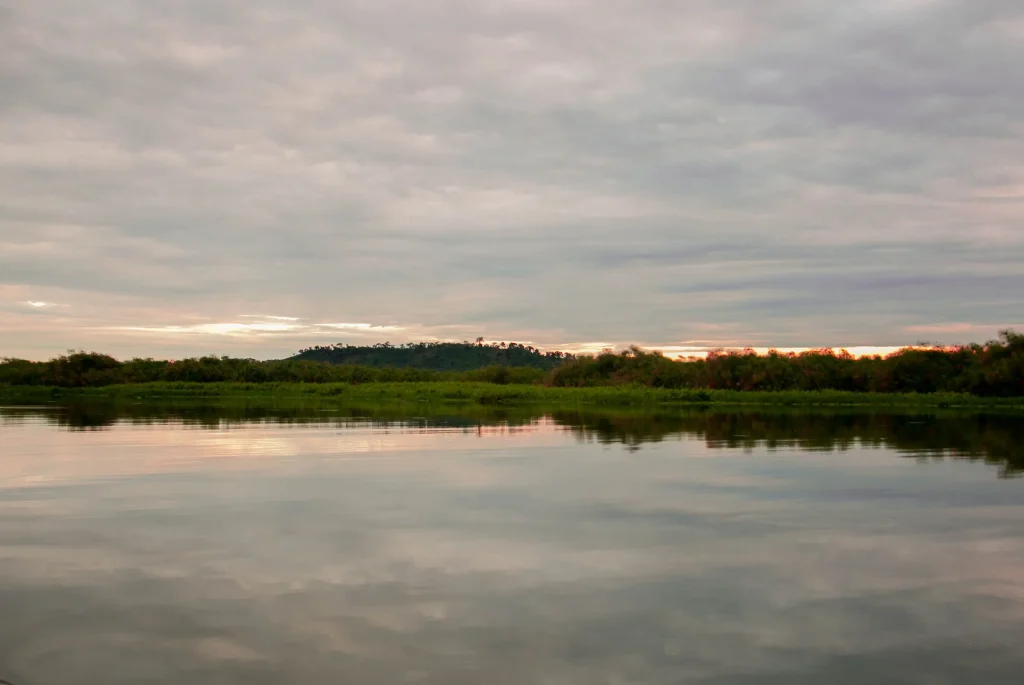
From Nauta, we navigate the Marañón River and the extraordinary region where the Marañón and Ucayali river systems meet.
Birding begins immediately.
Riverbanks, exposed branches, open skies and forest edges can reveal herons, shorebirds, raptors, parrots and other species while we travel toward our jungle accommodation.
The following three days are dedicated primarily to exploring the Pacaya Samiria region and Yanayacu basin.
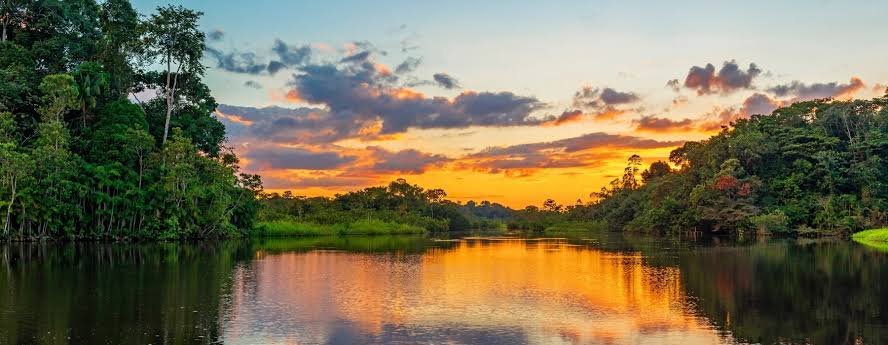
Here, rivers and seasonally flooded forests create excellent habitat for aquatic and forest birds.
Rather than covering long distances simply to accumulate names, we concentrate on productive habitats and allow time to listen, observe and follow bird activity.
Early mornings are particularly important.
We may begin before sunrise while vocalizations gradually emerge from different levels of the forest.
During the day, we combine boat-based birding, canoe exploration and forest walks, adapting our strategy according to weather, habitat and current bird activity.
Our targets can include several species of kingfishers, tanagers, jacamars, toucans and aracaris, woodpeckers, cotingas, parrots, macaws, wetland birds and raptors.
After darkness, the experience changes again as we listen and search for owls, potoos, nightjars and other nocturnal birds.
On Day 5, we leave the flooded environments behind and travel toward Allpahuayo-Mishana National Reserve.
This change of ecosystem is one of the defining features of the expedition.
Allpahuayo-Mishana protects unusual white-sand forest habitats, creating opportunities to search for a completely different assemblage of Amazon birds, including highly localized species sought by experienced birders visiting northeastern Peru.
This is not a general wildlife tour with occasional birdwatching.
Birding is the purpose of the journey.
Tour: Pacaya Samiria & Allpahuayo-Mishana Birding Expedition
Duration: 6 Days / 5 Nights
Starting Point: Iquitos
Ending Point: Iquitos
Region: Loreto – Peruvian Amazon
Primary Birding Areas: Pacaya Samiria Region & Allpahuayo-Mishana National Reserve
Main Pacaya Samiria Area: Yanayacu Basin
Main Focus: Specialized Amazon Birdwatching
Birding Level: Experienced / Advanced Birdwatchers
Physical Difficulty: Easy to Moderate
Activities: Birding by Boat, Canoe & Rainforest Trails
Best For: Experienced Birders, Bird Photographers, Ornithology Enthusiasts & Dedicated Nature Travelers.
BIRDING HIGHLIGHTS
- Explore two distinctive Amazon birding ecosystems
- Bird the waterways and flooded forests of the Pacaya Samiria region
- Explore the Yanayacu basin
- Discover the unique white-sand forests of Allpahuayo-Mishana
- Experience multiple early-morning birding sessions
- Search for several species of Amazon kingfishers
- Look for colorful tanagers
- Search for cotingas
- Look for toucans and aracaris
- Search for jacamars
- Observe different species of woodpeckers
- Look for parrots and macaws
- Scan wetlands for herons, storks and other aquatic birds
- Search open skies and forest edges for Amazon raptors
- Explore flooded forest by boat and canoe
- Walk rainforest trails looking for understory specialists
- Practice bird identification through vocalizations
- Observe feeding behavior and mixed-species activity
- Experience dusk and nocturnal birding
- Search for white-sand forest specialists
- Learn how habitat influences Amazon bird distribution
- Photograph birds in their natural environments
- Experience additional Amazon wildlife encounters along the way.
Itinerary
Day 1: Iquitos – Nauta – Amazon River System – Canopy & Forest-edge Birding.
The Birding Begins Immediately
Our 6 Day Pacaya Samiria & Allpahuayo-Mishana Birding Expedition begins with pick-up from your hotel or airport in Iquitos.
After meeting your specialized local guide, we travel toward Nauta, one of the principal gateways to the river systems of the Loreto region.
For dedicated birders, transfers are never simply transfers.
We begin watching immediately.
Roadside habitats, forest edges and open areas can provide our first opportunities to identify birds before we even reach the river.
Nauta & the Great Amazon River System
Upon reaching Nauta, we board our boat and begin navigating the Marañón River.
During the journey, we pass through the extraordinary region associated with the confluence of the Marañón and Ucayali rivers, whose waters form the Amazon River.
Open waterways create different birding opportunities from the forest interior.
We scan exposed branches, riverbanks, islands and the sky for herons, shorebirds, swallows, parrots and birds of prey.
Season and water levels strongly influence which species use these habitats.
First Canopy Birding Session
After arriving at our jungle accommodation and settling in, we begin our first dedicated birding walk.
Our focus shifts toward the forest canopy and edge habitats.
Potential observations can include colorful tanagers, cotingas, flycatchers, parrots and other canopy species.
Depending on natural activity, possibilities may include birds such as Paradise Tanager, Opal-crowned Tanager and Masked Tanager, among many others.
We also listen for parrots and parakeets moving through the canopy.
Macaws may occasionally appear overhead, often announcing themselves by voice before they become visible.
Birding Until the Light Fades
Rather than ending our excursion at a predetermined hour, we use the final light of the afternoon.
Birds begin changing behavior as sunset approaches.
Some species move toward roosts while others become increasingly vocal.
Our guide begins familiarizing us with the sounds that will become important during the following days.
After sunset, we return for dinner and prepare for an early start the next morning.
- Meals: Lunch & Dinner
- Accommodation: Jungle Accommodation.
Day 2: Pacaya Samiria – Yanayacu Basin – Kingfishers & Flooded Forest Birds.
Birding at First Light
Today begins early.
Very early.
Serious Amazon birding often starts before the sun appears above the forest.
We position ourselves in productive habitat while temperatures remain cool and bird activity begins increasing.
Calls emerge from several directions simultaneously.
Instead of moving rapidly, we listen.
A vocalization may reveal a bird that would otherwise remain completely invisible inside dense vegetation.
Into the Yanayacu Basin
Today we begin exploring the Yanayacu basin and the aquatic environments associated with the Pacaya Samiria region.
Water defines this ecosystem.
Rivers, creeks, lagoons and flooded forests provide habitat for an enormous variety of birds.
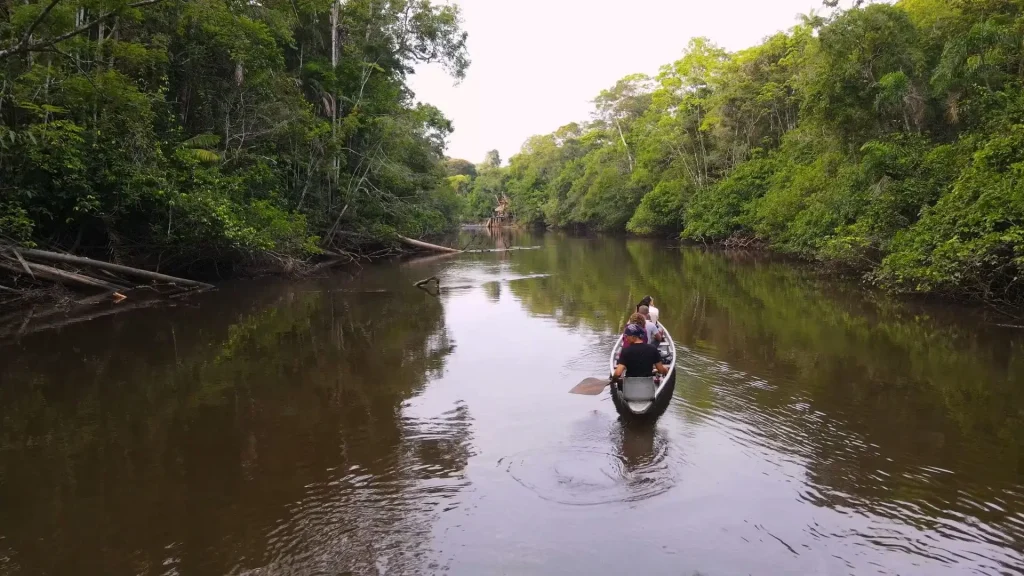
We explore by boat and, when appropriate, smaller canoe.
Moving quietly allows us to approach productive areas with minimal disturbance.
Amazon Kingfishers
One of today’s principal groups is the kingfishers.
Several kingfisher species occupy Amazon waterways, each using slightly different feeding strategies and habitats.
We carefully watch exposed branches above the water and listen for their characteristic calls.
Potential observations can include the Amazon Kingfisher, Ringed Kingfisher, Green Kingfisher, Green-and-rufous Kingfisher and American Pygmy Kingfisher.
Rather than simply checking them from a list, we compare size, plumage, bill proportions, behavior and preferred habitat.
Flooded Forest Specialists
As we enter quieter waterways, the forest begins closing around us.
Here, we search for species associated with várzea and seasonally flooded forest.
Our guide listens for jacamars, woodpeckers, tanagers, cotingas and other species moving between the canopy and lower vegetation.
Mixed-species activity can suddenly transform a quiet section of forest into several intense minutes of birding.
Afternoon Birding
After lunch and a short rest during the hottest part of the day, we return to productive habitat.
The afternoon gives us another opportunity to search for birds that may have remained hidden during the morning.
Depending on conditions, we continue exploring waterways or forest trails.
Nocturnal Birding
After dinner, our birding day is not necessarily over.
We head out again to listen for owls, potoos, nightjars and other nocturnal birds.
Night birding requires patience.
Often, the first encounter is purely auditory.
Our guide listens for calls and uses knowledge of habitat and behavior to help locate potential birds without unnecessarily disturbing them.
Other nocturnal wildlife, including caimans, frogs and insects, may naturally appear during the excursion.
- Meals: Breakfast, Lunch & Dinner
- Accommodation: Jungle Accommodation.
Day 3: Pacaya Samiria – Tanagers, Aracaris, Jacamars & Woodpeckers.
Dawn Birding Session
Another early morning gives us the opportunity to explore a different section of habitat.
By now, we are becoming familiar with some of the common calls around us.
This allows us to concentrate increasingly on more challenging species.
Tanagers & Mixed Flocks
Amazon forests can produce spectacular mixed-species feeding activity.
When we encounter a moving flock, the pace of birding can change instantly.
Several species may pass through the same trees within minutes.
Our guide helps us follow the flock and identify birds through combinations of plumage, behavior and vocalization.
Potential encounters include different tanagers, flycatchers and other canopy and mid-story species.
Aracaris & Toucans
We search fruiting trees and canopy openings for aracaris and toucans.
Possible species in the wider region include Chestnut-eared Aracari and other aracaris, depending on habitat and natural activity.
Despite their large bills and colorful appearance, these birds can disappear remarkably easily within dense foliage.
Listening is often essential.
Woodpeckers
Woodpeckers occupy another important ecological niche.
We listen for tapping, drumming and calls while scanning tree trunks and large branches.
Potential encounters can include Red-crested Woodpecker and other Amazon woodpecker species.
Jacamars
Few Amazon birds combine elegance and color quite like the jacamars.
Often perched quietly while waiting for flying insects, they can be easy to overlook.
We search appropriate exposed branches and forest edges while listening for their vocalizations.
Potential species include White-eared Jacamar and other jacamars associated with the region.
Cotingas & Canopy Birds
We also devote time to scanning the canopy for cotingas.
These birds can be difficult to locate because many spend considerable time high above the forest floor.
Patience, fruiting trees and careful scanning are often our best tools.
Late Afternoon & Dusk
After lunch, we resume birding during the afternoon.
Rather than repeating the exact morning route, our guide selects habitat according to the species already observed, weather and current activity.
As darkness approaches, we again listen for the transition between diurnal and nocturnal birds.
- Meals: Breakfast, Lunch & Dinner
- Accommodation: Jungle Accommodation.
Day 4: Pacaya Samiria – Wetland Birds, Raptors & Final Yanayacu Birding.
Final Morning in the Pacaya Samiria Ecosystem
Our final full birding session in this ecosystem begins before the heat builds.
Today we broaden our search toward wetland species, larger birds and raptors while continuing to pursue species we may have missed during the previous two days.
Wetland Birding
Pacaya Samiria’s enormous aquatic landscapes create habitat for impressive wetland birds.
Depending on season and location, we may search for Horned Screamers, hawks, storks, jacanas, herons, egrets and other water-associated species.
Possibilities can also include larger birds such as Jabiru and Roseate Spoonbill, although all observations depend entirely on natural activity.
Raptors
We periodically stop to scan open skies and exposed canopy.
Amazon raptors can be challenging.
Some soar above the forest.
Others remain almost invisible beneath the canopy.
Our guide watches for silhouettes, flight behavior and alarm calls from other birds that can sometimes reveal the presence of a predator.
Target Birding
By Day 4, we also have a better idea of what we have and have not encountered.
Our guide can therefore adjust the morning according to previous observations.
If a particular habitat produced interesting vocalizations without a visual encounter, we may return.
If another area was especially productive, we may spend additional time there.
This flexibility is fundamental to specialized birding.
Leaving Pacaya Samiria
After breakfast or lunch according to our operating schedule, we begin the return navigation toward our jungle accommodation and prepare for the next stage of the expedition.
Tomorrow, everything changes.
We leave the flooded forest ecosystem behind and enter one of the most distinctive bird habitats in the Iquitos region.
- Meals: Breakfast, Lunch & Dinner
- Accommodation: Jungle Accommodation.
Day 5: Allpahuayo – Mishana National Reserve – White-sand Forest Specialists.
A Completely Different Amazon
We begin early and travel through Nauta toward Allpahuayo-Mishana National Reserve, located near Iquitos.
The transition is extremely important for birders.
Until now, much of our expedition has focused on rivers, wetlands and flooded forest.
Today we enter white-sand forest, locally associated with distinctive Amazon habitats that support bird communities very different from those encountered around Pacaya Samiria.
Specialized Birding
Allpahuayo-Mishana is not simply another rainforest stop.
For serious birdwatchers, it represents an opportunity to search for highly localized species associated with these unusual habitats.
Our guide adjusts the pace accordingly.
We spend more time listening.
Understory species can remain hidden in dense vegetation and may provide only brief visual opportunities.
White-Sand Forest Targets
Among the specialized birds associated with the wider Allpahuayo-Mishana birding experience are species such as:
- Ancient Antwren
- Mishana Tyrannulet
- Allpahuayo Antbird
- Chestnut-tailed Antbird
Other possibilities can include:
- Gray-legged Tinamou
- Rufous Potoo
- Cinnamon-crested Spadebill
- Pompadour Cotinga
Every species remains subject to season, habitat and natural activity.
These are potential targets, never guaranteed sightings.
Listening Becomes Essential
White-sand forest birding can be challenging.
Many species remain in the understory.
Visibility may be limited.
Calls become extremely important.
Our guide uses knowledge of vocalizations and microhabitats to determine where to spend time.
This is where experienced birders often appreciate the difference between simply walking through a forest and genuinely birding a habitat.
Full-Day Field Session
We remain in the field for much of the day, carrying a field lunch so that productive birding time is not unnecessarily interrupted.
Our pace depends on activity.
A quiet trail may suddenly produce an important vocalization.
A mixed flock may keep us in the same area for an extended period.
This flexibility is intentional.
The birds determine our schedule.
After our final afternoon session, we settle into our accommodation or field camp in the Allpahuayo-Mishana area.
- Meals: Breakfast, Field Lunch & Dinner
- Accommodation: Allpahuayo-Mishana Area / Field Accommodation.
Day 6: Allpahuayo-mishana – Final Target Birding – Iquitos.
One Last Dawn
Our final morning begins early.
Rather than using today simply as a transfer day, we take advantage of the morning birding window.
We return to productive white-sand forest habitat and concentrate on species we may have missed the previous day.
Target Species Search
By now, our guide knows which target species have already been observed and which remain possible.
This allows us to use our final hours strategically.
We may return to a territory where a bird was heard but never seen.
We may concentrate on understory habitat.
Or we may search another section of forest for species requiring different microhabitats.
This is target birding, but always practiced responsibly.
No sighting is worth excessive disturbance.
Final Bird List
At the end of the morning, we review some of the most important observations from our six-day journey.
The value of this expedition is not simply the total number of species recorded.
We have experienced fundamentally different Amazon ecosystems:
large rivers, flooded forest, wetlands, forest edges, canopy habitats and white-sand forest.
Each supports a different bird community.
Understanding those relationships is what transforms a species list into a genuine Amazon birding experience.
Return to Iquitos
After completing our final birding session, we return toward Iquitos.
According to your travel arrangements, we transfer you to your selected hotel or the airport.
Our 6 Day Pacaya Samiria & Allpahuayo-Mishana Birding Expedition comes to an end.
Six days.
Two extraordinary Amazon ecosystems.
Hundreds of possible species.
And countless reasons to keep looking upward.
- Meals: Breakfast & Lunch.
Included
Included
- Pre-tour briefing
- Pick-up from your hotel or airport in Iquitos
- All scheduled ground transportation
- Transportation Iquitos – Nauta
- River transportation
- Boat and canoe transportation for scheduled birding activities
- Professional local birdwatching guide
- 5 nights accommodation according to the expedition program
- Meals indicated in the itinerary
- Field lunch during extended birding sessions when required
- Drinking water
- Required entrance arrangements for scheduled protected areas
- Pacaya Samiria region birding excursions
- Yanayacu basin exploration
- Allpahuayo-Mishana birding excursion
- Sunrise birdwatching
- River and wetland birding
- Flooded forest birding
- White-sand forest birding
- Forest trail birding
- Nocturnal bird search
- Bird identification assistance
- Bird vocalization interpretation
- Habitat and behavioral interpretation
- Additional wildlife observation
- Rubber boots when required by trail conditions
- Life jackets for river transportation
- First-aid kit
- Vegetarian and other dietary options with advance notice
- Return transfer to your hotel or airport in Iquitos.
Not Included
- Flights to/from Iquitos
- Dinner on Day 6
- Alcoholic beverages and soft drinks
- Personal expenses
- Travel insurance
- Personal medication
- Tips for birding guide, boat crew, drivers and support staff
- Professional photography equipment
- Activities not mentioned in the itinerary.
Packing List
What To Bring?
- Original passport or identification
- Lightweight neutral or earth-tone clothing
- Long-sleeved breathable shirts
- Lightweight long pants
- Comfortable waterproof walking shoes
- Lightweight rain jacket or poncho
- Sun hat or cap
- Sunglasses
- Sunscreen
- Strong insect repellent
- Reusable water bottle
- Comfortable birding daypack
- Field notebook
- Pen or pencil
- Personal bird checklist or birding app
- Field guide to Peruvian or Amazon birds if desired
- Flashlight or headlamp
- Extra batteries
- Power bank
- Personal medication
- Camera
- Telephoto lens for bird photography
- Waterproof protection for cameras and electronics
- Dry bag for sensitive equipment
- Personal toiletries
- Small amount of cash in Peruvian soles
- Travel insurance information
- Patience, quiet movement and enthusiasm for very early mornings.
IMPORTANT: THIS IS A SPECIALIZED BIRDING EXPEDITION
Our 6 Day Pacaya Samiria & Allpahuayo-Mishana Birding Expedition is different from a conventional Amazon wildlife tour.
The daily rhythm is designed around birds.
This means early starts, patient observation, periods of silence, repeated habitat searches and flexible schedules.
Sometimes we may remain in one area for a considerable period because an important species has been heard nearby.
At other times, we may change location because activity has suddenly decreased.
Experienced birders understand that successful birding is not about moving constantly.
Sometimes the best strategy is simply:
stop, listen and wait.