

Prevention of the Sexual Exploitation of Children and Adolescents (ESNNA)
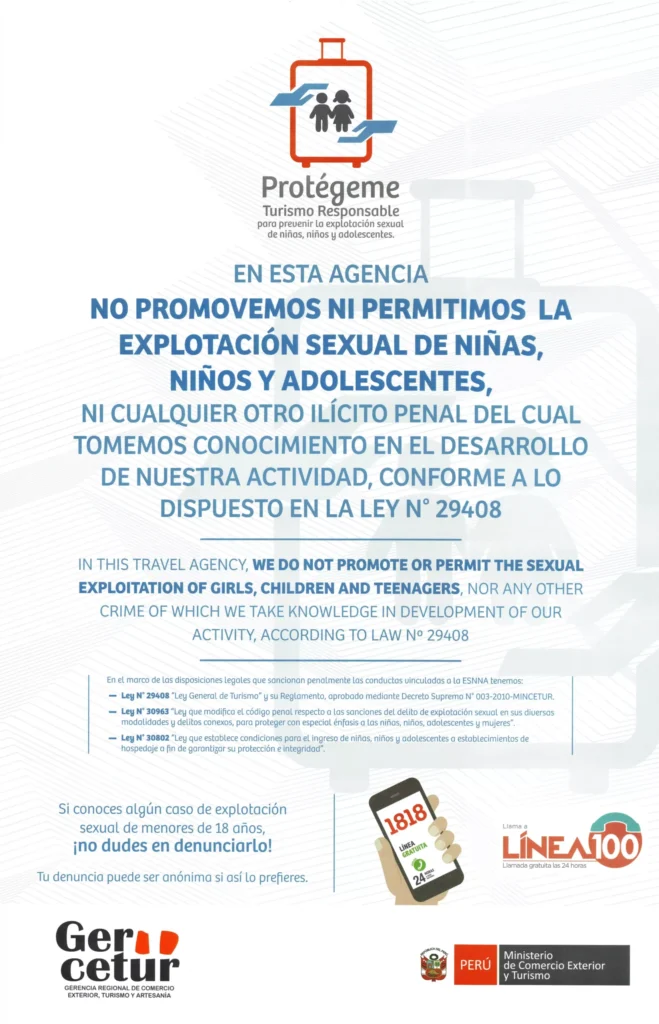
At Jungle Trekkers Peru, we firmly reject all forms of sexual exploitation of children and adolescents (ESNNA) in the travel and tourism sector. We believe that responsible tourism must respect human rights, protect the dignity of every person, and promote safe environments for all.
We reaffirm our commitment to preventing, raising awareness of, and reporting any situation that may threaten the physical, psychological, or sexual integrity of children and adolescents. We do not tolerate or promote any activity related to child sexual exploitation, and we reject any conduct that violates their fundamental rights.
What Is ESNNA?
The Sexual Exploitation of Children and Adolescents (ESNNA) refers to the use of individuals under the age of 18 for sexual, pornographic, or erotic purposes in exchange for money, promises of payment, or other material benefits, such as gifts, clothing, food, electronic devices, or other forms of compensation.
This practice is a serious violation of human rights and may occur in different settings, including travel and tourism. Preventing it requires the responsible participation of tourism businesses, industry workers, travelers, and society as a whole.
Prevention Policy and Zero Tolerance
At Jungle Trekkers Peru, we undertake the following commitments:
- Zero Tolerance: We do not promote, facilitate, or tolerate any activity related to the sexual exploitation of children and adolescents.
- Prevention and Awareness: We promote a culture of respect, protection, and responsibility among our employees, suppliers, business partners, and customers.
- Responsible Action: If we become aware of or suspect any incident involving ESNNA, we will report the relevant information to the competent authorities in accordance with applicable procedures.
- Responsible Tourism: We encourage ethical tourism practices that respect human rights and contribute to the protection of children and adolescents.
- Legal Compliance: We are committed to complying with applicable Peruvian legislation and the relevant regulations aimed at preventing the sexual exploitation of children and adolescents in the tourism sector.
Responsibilities of Our Travelers and Employees
We encourage our travelers, employees, and business partners to actively contribute to the prevention of ESNNA during tourism activities.
We ask everyone to behave respectfully, act responsibly, and report any suspicious situation that may place a child or adolescent at risk.
Protecting children and adolescents is a shared responsibility. Indifference and silence can allow these situations to continue; therefore, it is essential to act promptly and responsibly.
Legal Framework
Our prevention policy is guided by applicable Peruvian legislation, including Law No. 30802, which establishes requirements for the admission of children and adolescents to accommodation establishments to help safeguard their protection and well-being, as well as the regulations issued by Peru’s Ministry of Foreign Trade and Tourism (MINCETUR) concerning the prevention of ESNNA in the tourism sector.
We reaffirm our commitment to promoting safe, ethical, and sustainable tourism that is free from all forms of sexual exploitation of children and adolescents.
How to Report a Case
If you know of or suspect a situation involving sexual exploitation or sexual violence against a child or adolescent, contact the competent authorities for guidance or to file a report.
In Peru, you can contact the following services:
Line 100: A free service providing guidance and support in cases of domestic and sexual violence. It is available 24 hours a day, every day of the year.
Single Complaints Line – 1818: A channel operated by Peru’s Ministry of the Interior for reporting, among other offenses, suspected cases of human trafficking. Reports may be submitted anonymously or with personal details.
You may also contact the nearest police station or the Public Prosecutor’s Office to report the incident.
Protecting children and adolescents is everyone’s responsibility. Let us work together to promote responsible tourism that is safe and free from sexual exploitation.